


Guild Wars 2 Beginner Guide: Character Creation, Races, Professions, and Early Progression
Guild Wars 2: What You Need to Know
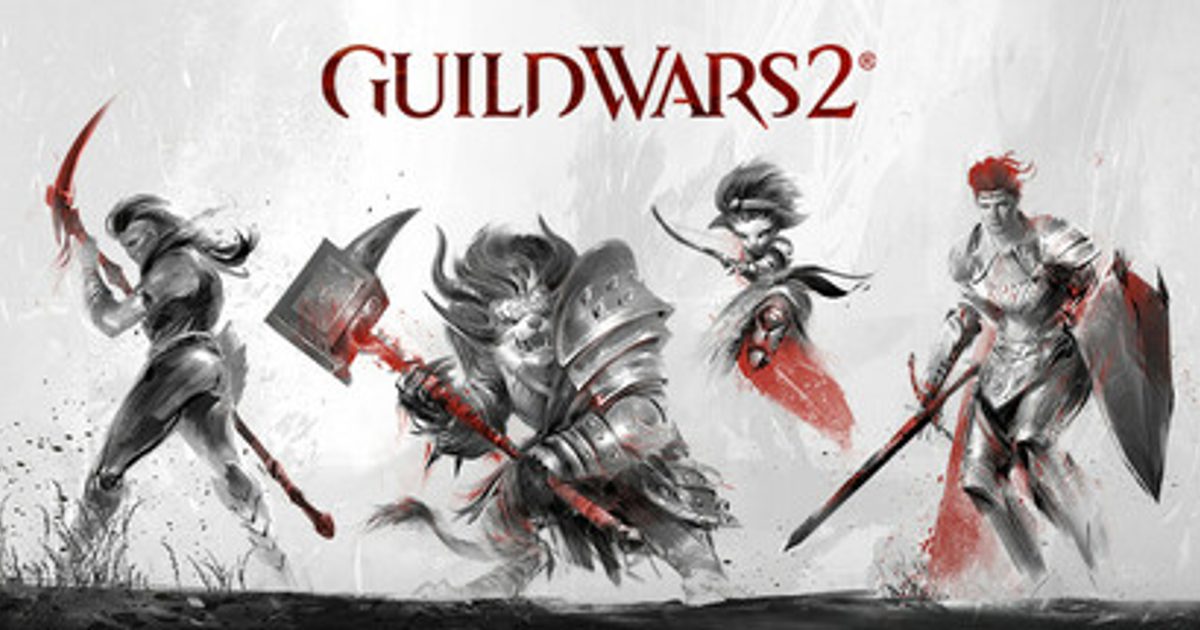
Guild Wars 2 has five playable races and nine professions. Your race affects your starting area and personal story; your profession determines how you fight and the armor type you use. This guide covers character creation, your opening tutorial, starting zones and early level rewards. Account restrictions are identified separately because free accounts and purchased accounts do not have identical unlocks.
First-Session Checklist
- Choose a race for its story and starting area. Compare the five races below; avoid assuming one race is the only viable choice for a profession.
- Select a profession for its combat style. All nine professions are available regardless of your character’s race or gender, according to the linked character-creation reference.
- Customize appearance and biography. Read the biography questions if personal story choices matter to you. The character creator also offers a shortcut to resolve biography choices.
- Name your character and complete the introduction. The tutorial leads into your race’s starting region.
- Use the starting zone to learn systems. Check level-up notifications for rewards and explanations instead of treating every displayed system as immediately unlocked.
- Check account-type limitations. Some access rules for free accounts differ from paid accounts; do not apply a free-account restriction to everyone.
For game updates beyond this beginner guide, see our Guild Wars 2 coverage.
Character Creation: Building Your Hero
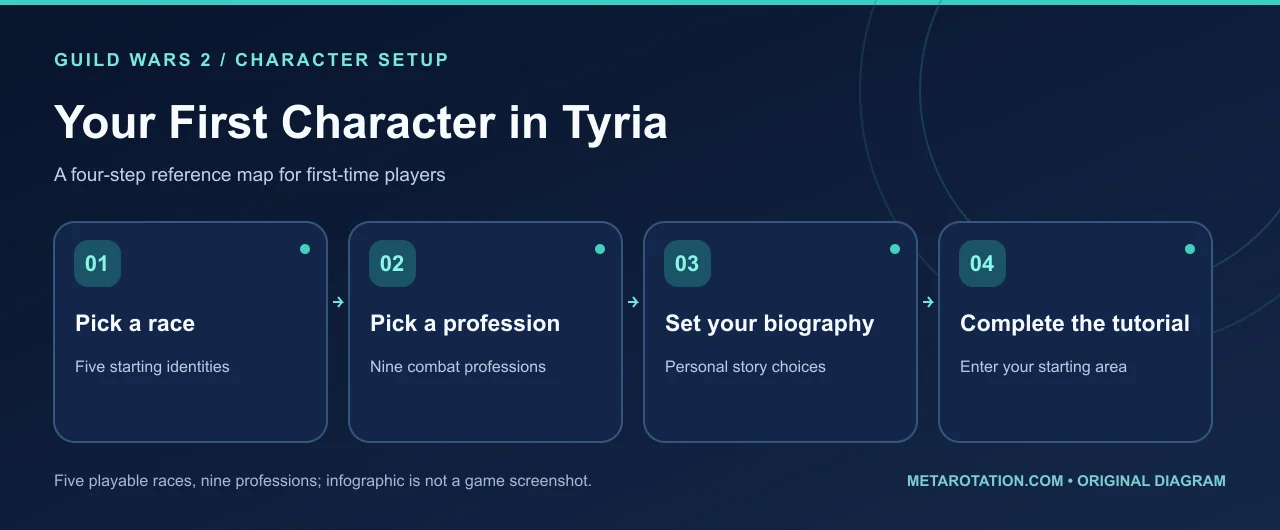
Character construction follows a sequential workflow consisting of ten steps. This process moves logically from broad conceptual choices to detailed customization. You select your race, gender, profession, visual appearance, and background biography before finalizing your name. The interface provides flexibility; if you prefer not to deliberate over every biography question, you can use the “Skip to End” option within the background section. This shortcut instructs the game to randomly resolve those queries, advancing you directly to the naming phase.
Race Selection and Lore
Your initial choice involves picking one of five playable races. This decision establishes your starting zone, racial skills, personal story chapters, and visual aesthetics. The game design emphasizes balance, ensuring no race possesses an unfair mechanical advantage over others. Each race carries unique lore and cultural traits:
- Asura: Despite their small physical stature, asura function as intellectual giants and magical inventors. They rely on knowledge and crafting prowess to assert dominance, operating under the philosophy that cleverness prevails over raw strength. Other races often mistakenly believe power grants them authority, but asura view these beliefs as self-delusion.
- Charr: The charr culture was forged through relentless warfare, making conflict central to their existence. Their drive for dominion pushes them forward without hesitation. Within charr society, weakness and foolishness have no standing; victory remains the sole objective, achievable through any necessary means.
- Humans: Having lost their homeland, security, and former glory, humans face a precarious existence. Even their gods have withdrawn their presence. Nevertheless, the human spirit endures. These defenders continue to fight with unwavering determination to protect Kryta.
- Norn: Norn are towering hunters whose history includes a devastating defeat inflicted by an Ice Dragon that drove them from their glacial homeland. Rather than losing momentum, they maintain an intense enthusiasm for life and the hunt. They operate on the belief that only the ultimate victor secures legendary rewards.
- Sylvari: These beings do not undergo traditional birth; instead, they awaken beneath the Pale Tree carrying knowledge gathered during their pre-life Dream. As noble travelers, they seek adventure and discovery. Sylvari constantly strive to balance opposing forces, managing curiosity alongside duty, eagerness next to chivalry, and warfare in harmony with honor. Magic and mystery intertwine to define their rapidly evolving future.
Gender selection applies uniformly across all races, offering male or female options. Gameplay mechanics remain identical regardless of gender; differences manifest solely in physical appearance and select dialogue variations.
Professions and Combat Roles
Step three allows you to choose from nine professions, unrestricted by your race or gender selections. Professions categorize into three armor tiers: Soldier, Adventurer, and Scholar. Each tier dictates the armor weight your character wears.
Soldier Professions (Heavy Armor)
- Guardian: Guardians wield protective and defensive magic fueled by loyalty to allies. They adapt well to various weapons, utilizing them effectively against foes.
- Revenant: Revenants draw energy from the Mists to channel the power of historical legends. This connection enables massive attacks that dominate opponents and unleash chaotic effects across the battlefield.
- Warrior: Warriors excel in martial combat, relying on speed, strength, toughness, and heavy armor for survival. They demonstrate versatility in offense and defense while possessing abilities to inspire teammates and demoralize enemies.
Adventurer Professions (Medium Armor)
- Engineer: Engineers apply technological and alchemical expertise to combat. They deploy devices such as turrets, grenades, and elixirs to overcome adversaries.
- Ranger: Rangers specialize in bow combat, utilizing sharp vision and precision. They harness nature’s power to eliminate targets while commanding loyal pets. Trained animals distract enemies, allowing rangers to strike safely from range.
- Thief: Thieves master stealth tactics, using shadow and surprise to approach enemies undetected. They excel in one-on-one engagements and demonstrate a talent for trap deployment and infiltration.
Scholar Professions (Light Armor)
- Elementalist: Elementalists command Tyria’s natural forces, drawing destructive power from the four core elements: air, fire, earth, and water. They conjure these forces to assault enemies.
- Mesmer: Mesmers manipulate mental magic to create mirages. They confuse, control, or influence enemy emotions. By shattering their own illusions, mesmers generate enhanced special effects.
- Necromancer: Necromancers practice dark arts, summoning undead minions and channeling blood energy. They rend enemy souls and harvest life force to strengthen or heal themselves and allies.
Appearance and Biography Customization
Visual customization occurs in step four, covering body features, head options, face details, and armor dyes. The subsequent biography steps involve answering five multiple-choice questions. The first question selects a profession-specific aesthetic element, determining the appearance of one armor piece. Rangers receive a separate query affecting their pet selection based on race. The second question sets your character’s personality, influencing NPC reactions and dialogue options. The final three questions are race-specific and determine your personal story, shaping Chapter I and Chapter II events based on your background, motivations, and experiences.
Naming Conventions
The final step requires entering a character name. Names must contain three to nineteen characters, using only letters and optional spaces. Formatting enforces title case, meaning the first letter of each word capitalizes automatically, and names must begin with a letter. The English client supports standard alphabet letters plus accented characters like à and è. All client versions additionally permit umlauts such as Ä, Ö, and Ü.
For players seeking lore consistency, certain races follow specific naming customs. Charr typically use Roman or Grecian first names, paired with surnames combining a warband name and a descriptive term. Norn generally adopt Norse-inspired first names. Last names fall into two categories: kin-centric terms based on ancestor veneration, such as patronymics or matronymics, or descriptive nicknames reflecting deeds or traits.
Starting Areas and Services
Your race choice places you in a specific starting zone after completing a brief instanced tutorial. Upon finishing the tutorial, you gain freedom to travel throughout the world and arrive in a low-level area tailored to your race. Before reaching level 10, free accounts can access a waypoint located within every starter area. However, free accounts cannot enter the services district of any race’s capital city. Instead, an adjacent Services area provides essential resources, including all crafting stations, master craftsmen, merchants, account vaults, material storage, and wardrobe storage.
| Race | First local settlement | Starting zone |
|---|---|---|
| Asura | Soren Draa | Metrica Province |
| Charr | Village of Smokestead | Plains of Ashford |
| Human | Village of Shaemoor | Queensdale |
| Norn | Snowlord’s Gate | Wayfarer Foothills |
| Sylvari | Village of Astorea | Caledon Forest |
Each starting area features an unlocked waypoint. Additionally, a Dodge Instructor resides in an adjacent area near the starting zones. The game configures enemy encounters in these early zones to be less threatening compared to higher-level areas, helping newcomers learn mechanics.
Early Progression and Level Rewards
Leveling up triggers the New Player Experience system, introduced to guide users through core features. As your character advances from level 2 to 80, a notification appears on the screen. Clicking this notification opens a reward panel showing items granted for that level. The level-up guide also highlights important game systems marked with an information icon, providing tooltips that explain mechanics. Unlocks may grant skills, traits, personal story chapters, and other features.
Some systems indicated in the guide are not strictly locked; players can access them earlier via portals or hotkeys. While most informational popups are available immediately, certain features require reaching specific level milestones. Once unlocked at the milestone, these features become available to all characters on the account, regardless of individual levels.
Map visibility changes as you progress. Points of interest appear on the map at level 2, though information about them may appear later at level 4. Hero challenges and hero points unlock at level 11. You can still discover points of interest and complete event hero challenges started by others before these thresholds, but doing so will not reveal their map icons until you meet the level requirement.
Account type influences access to competitive modes. Paid accounts gain access to World vs World at level 31. Free accounts must reach level 60 to unlock World vs World. Furthermore, free accounts cannot participate in Structured PvP until a character achieves level 3. Upon reaching the maximum level of 80, the Wizard’s Vault becomes available. Early leveling rewards between levels 2 and 10 include attribute boosts and skill unlocks, setting the foundation for your character’s development.
Sources
This original guide is based on the following referenced material:
- Character Creation — Guild Wars 2 Wiki (ArenaNet-hosted, community-maintained)
- Starting Areas — Guild Wars 2 Wiki (ArenaNet-hosted, community-maintained)
- Level Rewards and Early Progression — Guild Wars 2 Wiki (ArenaNet-hosted, community-maintained)
Share Article
If this article helped you, please share it with others!