


Rust Patch Brings Domesticated Livestock, Base-AI Navigation, and Grid-Powered Vaults
What changed
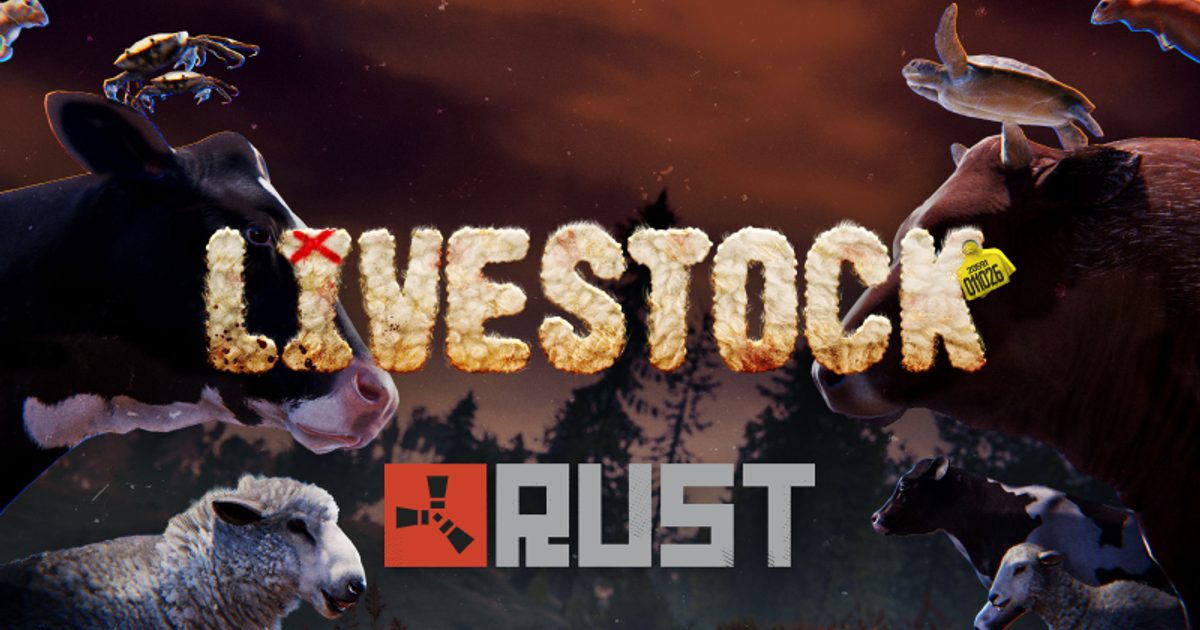
Domesticated cattle and sheep have joined the island, expanding the resource loop with dung, meat, bones, and leather. Cows yield milk while sheep produce wool, and both species feature internal genetics that allow selective breeding. A new stable vendor trades mature livestock or bulk wool deposits for randomized rewards scaled to gene quality and batch volume, capping at three negotiation attempts before a fifteen-minute refusal cooldown triggers. Fresh milk must sit in refrigeration for four hours before players can separate it into standard and high-potency variants, both utilized in tea-crafting to extend duration or boost strength respectively.
To manage the new fauna, builders gain dedicated animal gates and fences. The updated navigation mesh allows these NPCs to walk through player structures and properly interact with open and closed doors. Alongside larger animals, frogs, rabbits, squirrels, sea turtles, crabs, and jellyfish now populate matching biomes as heavily budgeted environmental details.
Infrastructure and progression receive several adjustments. The Bandit Camp helipad spawns damaged at wipe, locking the aircraft vendor until players hammer resources into the pad until fully restored. That repair state persists for the entire wipe cycle. Sandbag defenses now utilize a four-tier vertical stacking system ending in a pillbox configuration, with altered crate costs, initial loot stacks of four, and a maximum inventory pile of twenty. Additionally, multiple monuments including the Airfield now contain secured chambers that unlock once the Powerplant accumulates enough heavy fuses to generate sufficient grid power. A new manual biofuel converter also recycles raw or spoiled organic matter into low-grade fuel, demanding player stirring every thirty minutes unless connected to an IO notification module, with output volume tied to the input’s calorific rating.
Why it matters
This update pivots the meta toward active husbandry and cooperative base engineering. By shifting AI processing to a frame-by-frame budget system, servers avoid direct FPS drops when animal counts rise, though reaction times may lag under extreme loads. The helipad repair mechanic intentionally delays early-game aerial advantages, forcing clans to pool scrap and components while exposing their efforts to rival factions. Sandbag stacking fundamentally alters defensive geometry, rewarding layered construction over flat walls. The powergrid vaults create a server-wide pacing tool, ensuring high-tier loot remains gated behind collective monument clearing and fuse accumulation rather than individual raiding speed.
What to do next
Begin tracking and capturing wild herbivores using the newly streamlined trapping methods. Construct enclosed pens with the dedicated animal gates to manage breeding lines and track genetic traits. Secure reliable refrigeration space to process dairy before skimming for advanced tea recipes. Accumulate substantial building materials to fund the Bandit Camp helipad restoration if air mobility is a priority. Redesign defensive perimeters to accommodate the multi-layer sandbag stacking system and adjust your inventory management for the new stack limits. Coordinate heavy fuse collection with neighboring groups to unlock the sealed rooms at major landmarks. Server administrators should review the vehicle.padrepairsrequired and vehicle.setrepairablepads console variables to verify default repair behavior aligns with community expectations.
Share Article
If this article helped you, please share it with others!