


Predecessor Explainer Guide: Third-Person Movement, Roles, and Cross-Play Mechanics
Practical Orientation for New Predecessor Players
Predecessor translates classic multiplayer online battle arena concepts into a third-person, three-dimensional action environment. Developed by Omeda Studios, the game replaces traditional top-down camera views with a direct over-the-shoulder perspective. Players looking to jump into the action should review the following checklist of essential setup and gameplay steps.
Actionable Orientation Checklist
- Select Your Platform and Controls: Predecessor is available on PC, PlayStation, and Xbox. Players on console can play from the couch using a controller, while PC players can utilize keyboard and mouse or controller setups.
- Enable Cross-Play and Voice Integration: Cross-play links PC and console player bases into a unified matchmaking pool. Use the integrated Discord-powered voice comms to make real-time tactical callouts with teammates regardless of their system platform.
- Select Your Hero and Role: Pick a character that matches your tactical preference. The roster includes diverse archetypes such as stance-shifters, summoners, gods, and grounded soldiers.
- Capitalize on 3D Environment Features: Use vertical terrain, walls, and structural angles to your advantage. Practice vaulting over obstacles and launching into the air to attack enemies from above.
- Execute the Core Objective Loop: Win your lane, travel across the map to slay epic monsters, upgrade your hero abilities, engage in teamfights, and shred enemy structures to push your team toward victory.
For a broader intro to basic tactical gameplay, refer to our Predecessor Beginner Guide: Mastering Omeda Studios’ Third-Person MOBA.
The Third-Person MOBA Paradigm: 3D Movement and Verticality
Predecessor separates itself from traditional top-down MOBAs through true third-person camera positioning and full 3D spatial freedom. Rather than clicking on a two-dimensional overhead map to move, players control their Heroes directly in real time, navigating realistic elevation changes and complex architecture.
Exploiting Spatial Angles and Walls
In standard isometric MOBAs, sightlines are flattened. In Predecessor, every wall, corner, structure, and incline impacts both sight lines and targeting angles. Players must aim abilities manually through three-dimensional space, taking line-of-sight obstructions into account. Corner sightlines allow for unexpected ambushes, while physical walls block direct line-of-fire abilities unless an airborne or terrain-bypassing skill is used.
Vertical Traversal and Air Combat
Terrain in Predecessor is not merely a visual backdrop; it serves as an active combat tool. Gameplay design encourages vertical mobility, allowing players to:
- Vault Over Terrain: Climb or vault across environmental barriers and enemy positions to escape traps or cut off retreating foes.
- Take to the Skies: Launch entirely off the ground plane into the air, raining down destructive abilities onto opponents from directly overhead.
- Exploit High-Ground Sightlines: Gain elevated positions atop structures or ledges to gain strategic overview during chaotic team clashes.
This emphasis on verticality changes how teams approach choke points, jungle pathways, and open lane battlefields.
Hero Archetypes and Ability Mechanics
Predecessor features a varied cast of Heroes built to cater to diverse playstyles. Omeda Studios designed these characters with an “easy to learn, deep to master” philosophy, making them approachable for new competitive players while offering significant technical skill ceilings for veterans.
Character Design Classifications
- Stance-Shifters: Flexible Heroes capable of switching their operational modes or attack forms to adapt instantly to dynamic battle situations.
- Summoners: Playable characters that conjure external entities, structures, or pets onto the field to control area space and harass targets.
- Gods: Mythic-level combatants wielding wide-area elemental or magical powers designed to dominate large-scale clashes.
- Soldiers: Martial, weapon-focused combatants relying on direct damage, physical agility, and structured tactical engagement.
Ability Upgrades and Combat Mechanics
Every Hero possesses unique active and passive abilities that tip the scales of combat when deployed effectively. As matches progress, players earn points to upgrade these abilities, altering their effectiveness and synergy within team fights.
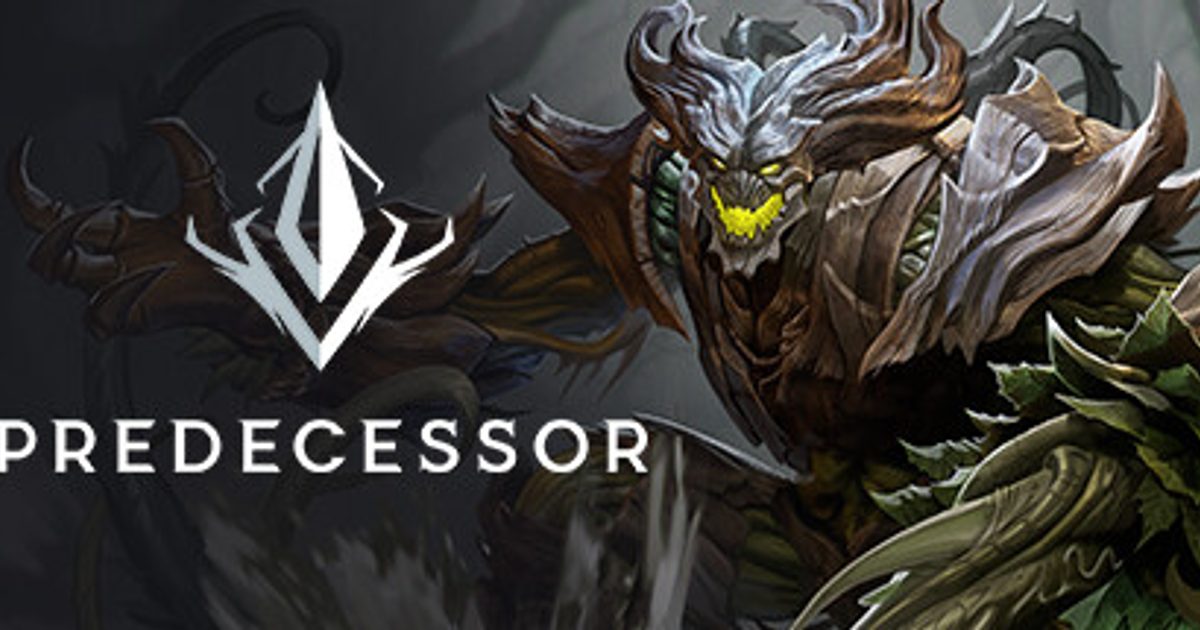
Certain abilities trigger passive environmental effects upon defeating opponents. For instance, the Nature’s Vengeance mechanic causes an Untamed Growth feature to spawn on an enemy’s corpse each time you kill an enemy Hero or unit. Managing hero-specific mechanics like this requires keeping track of active unit corpses and field control markers during active fights.
Match Structure, Objectives, and Escalation
Matches in Predecessor revolve around tactical territory control, resource scaling, and objective destruction across a multi-lane arena.
Phase 1: Lane Selection and Early Skirmishing
At the start of a match, players choose their preferred Hero and select their corresponding role. Teams disperse into specific lanes to contest minion waves and enemy Heroes. Establishing early lane dominance creates safety margins, allowing Heroes to harvest resources and secure early ability upgrades.
Phase 2: Map Traversal and Epic Monsters
As heroes accumulate power, action expands beyond individual lanes. Players travel into neutral map zones to secure objective monsters:
- Slaying Epic Monsters: Defeating high-value boss monsters located across the map grants exponential power increases and team-wide advantages.
- Objective Rotation: Neutral objectives force localized skirmishes, drawing both teams into coordinated clashes away from lane structures.
Phase 3: Teamfights and Structure Shredding
In the final phases of a match, individual skirmishes give way to full teamfights. Teams must balance two simultaneous demands:
- Dipping In and Out of Teamfights: Knowing when to engage with high-impact ultimate skills and when to disengage to recover cooldowns.
- Shredding Enemy Structures: Capitalizing on won teamfights by attacking and destroying fortified enemy defensive structures to open routes directly into the enemy base.
Platform Features, Control Schemes, and Voice Integration
Predecessor offers complete parity across console and PC platforms, removing historical barriers between different control methods.
Cross-Play and Control Scheme Options
- Cross-Play Infrastructure: Players on PC, PlayStation, and Xbox matchmake together in a single global player pool.
- Console Controller Gameplay: Console players can plug in a controller and play comfortably from the couch without being separated from the main matchmaking ecosystem.
- Keyboard and Mouse Parity: Mouse-and-keyboard PC players interact within the same server instances, testing their manual precision directly against controller players.
Discord-Powered Voice Communications
To facilitate fast callouts across cross-play lobbies, Predecessor integrates native Discord-powered voice comms. This built-in integration lets squad members communicate seamlessly regardless of whether individual team members are playing on console hardware or PC rigs.
Community-Driven Development and Competitive Scene
Omeda Studios built Predecessor through a transparent, community-focused development model. Originally coded live on Twitch during early production phases, the studio continues to involve players directly in long-term balancing and feature planning.
Transparent Feedback Loops
Major gameplay decisions and structural directions are regularly polled within the community. Player feedback directly dictates game direction, establishing open channels between developers and competitive players.
Esports and Community Tournaments
Predecessor supports a structured competitive ecosystem that includes:
- Community Tournaments: Open-bracket competitions organized by grass-roots community groups.
- Official Esports Events: High-stakes tournaments organized by Omeda Studios to showcase top-tier competitive talent.
Visual Design and Customization Features
Beyond core gameplay, Predecessor leverages modern rendering tech and visual polish to deliver a cinematic MOBA experience.
Graphical and Audio Fidelity
- Cinematic Visuals: Detailed environmental assets, high-definition character models, and complex visual effects push graphical fidelity beyond traditional overhead MOBA standards.
- Acoustic Feedback: Audio design delivers heavy directional sound cues, enabling players to hear positional audio and feel nearby explosions clearly during combat.
Personalization Systems
Players can personalize their favorite characters through several visual customization options:
- Legendary Skins: High-tier cosmetic outfits that overhaul character visual themes.
- Custom Visual Effects: Unique particle effects attached to abilities and combat actions.
Technical Summary of Predecessor Systems
The table below summarizes the technical specifications, platforms, and structural systems present in Predecessor.
| System Category | Supported Features & Mechanics |
|---|---|
| Developer & Publisher | Omeda Studios (Copyright 2025) |
| Supported Platforms | PC, PlayStation, Xbox |
| Control Inputs | Controller, Keyboard and Mouse |
| Cross-Play & Voice | Full Cross-Play, Discord-powered voice comms |
| Perspective & Spatial Focus | True 3D Third-Person, verticality, wall/structure exploitation, mid-air combat |
| Hero Classifications | Stance-Shifters, Summoners, Gods, Soldiers |
| Core Objective Flow | Lane fighting, slaying epic monsters, upgrading abilities, teamfights, structure shredding |
| Development Model | Community-driven, public polls, transparent updates, live-code origins on Twitch |
| Competitive Ecosystem | Community tournaments, official esports events |
| Cosmetics | Legendary skins, custom visual effects |
Sources
This original guide is based on the following referenced material:
- Game Official Website — Predecessor
Share Article
If this article helped you, please share it with others!